
The Microbiome: The Ecosystem Inside You That Helps Shape Digestion, Immunity and Inflammation.
Your gut is home to a massive community of bacteria, viruses, fungi and other microorganisms. They are not just passengers. They help determine what happens to food that reaches the colon, what metabolites are produced, how the intestinal barrier is supported, and how the immune system is signaled.
This is not a side topic in gut health. When the microbial ecosystem is resilient, it supports normal digestive and immune function. When it is disrupted, the effects can reach bowel habits, food tolerance, barrier function, inflammatory signaling and more.
What Is the Gut Microbiome?
Think of it as a living ecosystem inside the digestive tract — especially the large intestine.
Microbiota refers to the microorganisms themselves. Microbiome is often used more broadly for those organisms, their genes, and the functional environment they create.
The gut microbiome contains enormous numbers of microorganisms. Different people can have very different microbial communities and still be healthy. That is why the goal is not to identify one magical list of “good bacteria.”
What matters is what the community is doing: how it ferments food, what compounds it produces, how it interacts with the intestinal lining, and what kinds of signals it sends to the immune and nervous systems.
That functional activity is one reason gut health can affect far more than whether you have a bowel movement every day.
Your microbial ecosystem changes with your environment.
The Microbiome Helps Run Several Jobs Your Body Depends On.
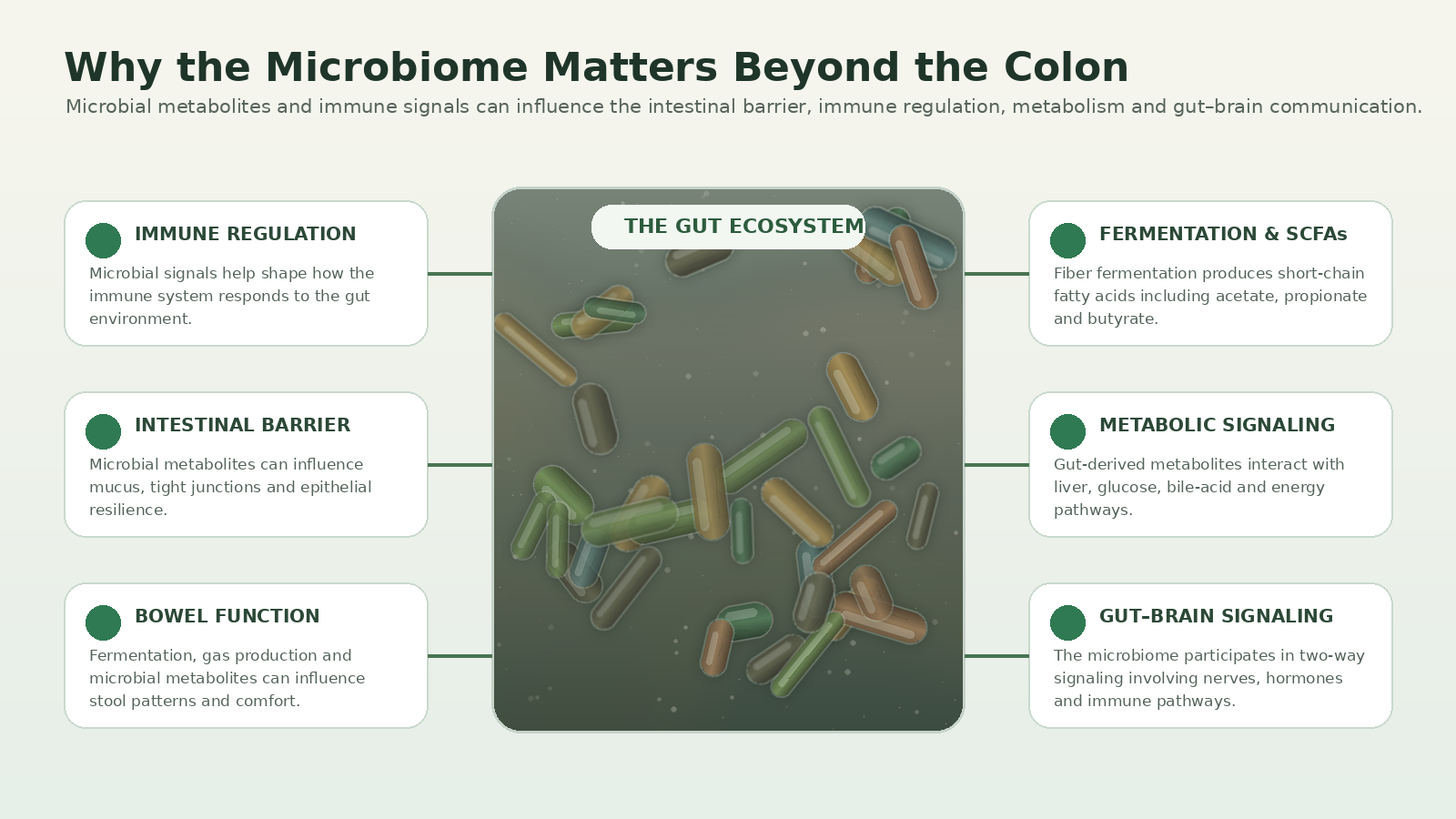
The microbes in your gut change the chemical environment of the intestine every day. That means they can influence digestion locally while also affecting barrier and immune signaling.
Fermentation
Human enzymes cannot fully digest every carbohydrate we eat. Gut microbes ferment many fibers and resistant starches that reach the colon.
If fermentation is contributing to gas or fullness, explore Bloating →Short-Chain Fatty Acids
Fermentation can produce metabolites such as acetate, propionate and butyrate. These compounds participate in intestinal, immune and metabolic signaling.
Barrier Support
Microbial metabolites interact with the mucus layer and intestinal cells. Butyrate, in particular, is an important fuel for colon cells and is involved in barrier homeostasis.
Explore the Gut Lining & Intestinal Permeability →Immune Regulation
The intestinal immune system is constantly sampling and responding to the microbial environment. Healthy regulation requires learning when to react — and when not to overreact.
Explore the Gut–Immune Connection →Colonization Resistance
Established microbial communities can make it harder for some harmful organisms to gain a foothold by competing for space and resources.
Bowel Function
Fermentation, gas production, microbial metabolites and interactions with intestinal movement can all influence stool patterns and digestive comfort.
Explore Constipation & Diarrhea →The Gut Ecosystem Communicates With the Rest of the Body.
The strongest evidence is not that every disease begins in the microbiome. It is that microbial products and signals interact with systems that matter throughout the body.
Dysbiosis: When the Microbial Community Is No Longer Working the Same Way.
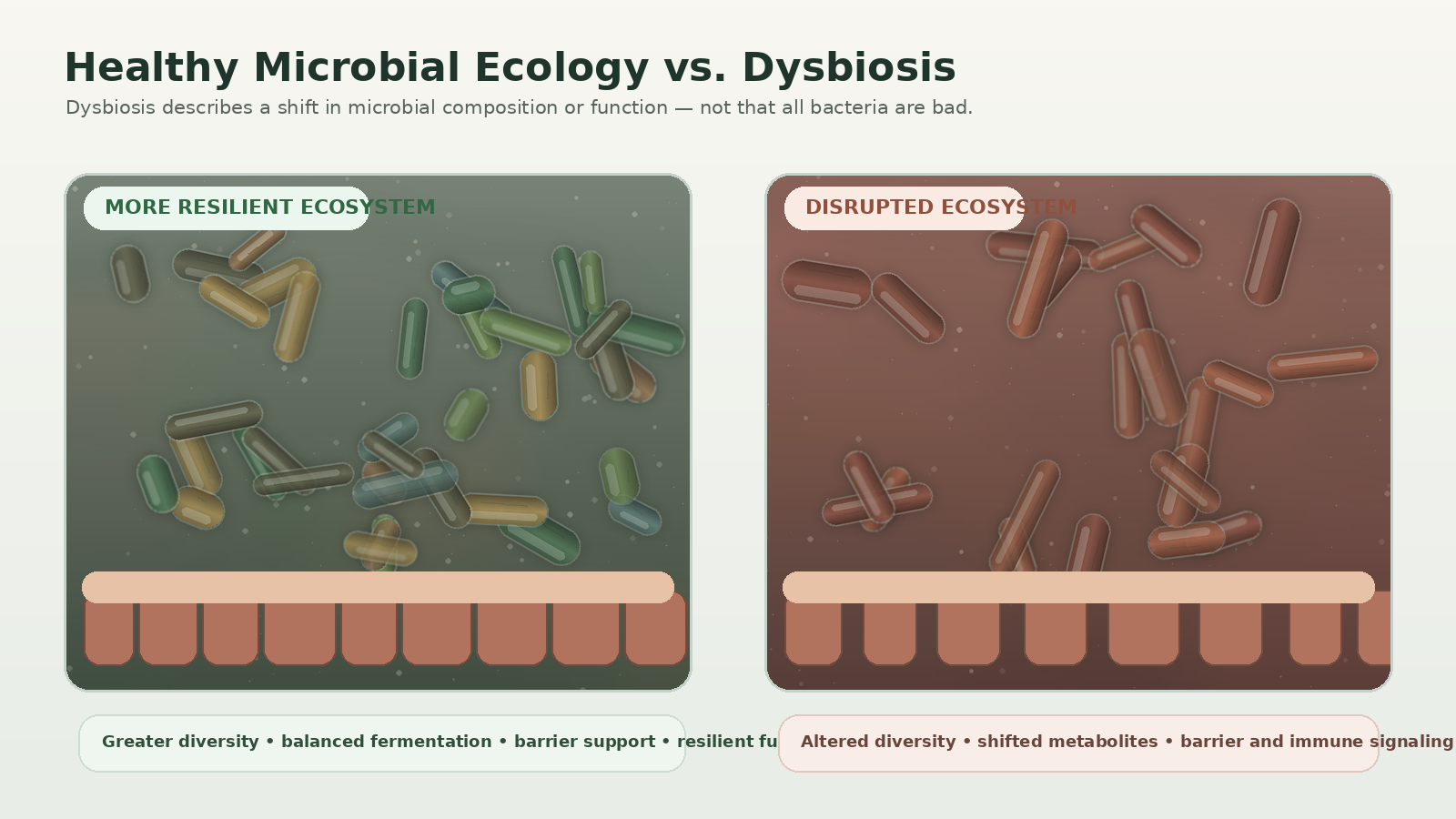
Dysbiosis is a broad term for changes in microbial composition or function. It does not mean every unusual bacterium is harmful, and there is no single universally accepted “dysbiosis score.”
The Microbiome Does Not Have One Signature Symptom.
That is exactly why context matters. Microbial disruption can overlap with many different symptom patterns, but none of these symptoms proves dysbiosis by itself.
The Microbiome Is Important. That Does Not Mean Every Internet Claim Is True.
A useful gut-health plan needs enough urgency to take the system seriously — and enough discipline to avoid turning it into a cure-all.
“All probiotics are basically the same.”
Different strains can have different effects, and benefits shown for one strain or condition cannot automatically be assigned to every probiotic product.
“If I eat healthy, my microbiome must be perfect.”
Diet matters, but the microbiome is also shaped by medications, infections, age, sleep, stress, exercise, geography and other exposures.
“A stool test can tell me exactly what foods I should eat.”
Microbiome testing is advancing rapidly, but international experts still caution that many commercial tests do not yet have proven clinical value for diagnosing a “bad microbiome” or prescribing individualized treatment.
You Do Not Need to Micromanage Every Bacterium. You Need to Improve the Environment They Live In.
The most useful microbiome strategies are usually less glamorous than the internet makes them sound. They focus on creating the conditions that support diversity, healthy fermentation, bowel regularity and barrier function.
A wider variety of plant foods exposes the gut to a wider variety of fibers, resistant starches and polyphenols.
Fiber supports microbial fermentation, but rapidly increasing it can worsen gas and bloating in some people. Tolerance matters.
Foods such as yogurt, kefir, sauerkraut and kimchi can fit well for some people, but they are not mandatory and may not be tolerated by everyone.
A diet dominated by highly processed foods can crowd out fiber-rich whole foods and reduce dietary diversity.
Exercise is associated with gut and metabolic benefits and can also support normal bowel movement patterns.
The gut and nervous system communicate constantly. Poor sleep and chronic stress can change digestive function and eating patterns.
Antibiotics can be essential and lifesaving. They can also alter microbial communities, which is one reason they should be used when medically appropriate rather than casually.
Transit time changes the environment microbes live in. Chronic constipation or diarrhea should not simply be ignored as “your normal.”
Can You Test Your Microbiome?
Yes — but the answer needs context. Stool testing can be extremely useful when a clinician is looking for a specific infection, inflammatory marker, digestive marker, or other defined clinical question.
Broad consumer microbiome sequencing is different. It can produce interesting information about which organisms are detected, but there is still no universally accepted definition of the perfect microbiome, and current expert consensus does not support using many direct-to-consumer microbiome profiles as stand-alone diagnostic or treatment tools.
The test should answer a useful clinical question — not just generate a long list of bacteria.
Do You Need a Microbiome Test to Improve Gut Health?
Often, no. Symptoms, bowel patterns, diet, medication history, prior infections, food tolerance, sleep, stress and basic medical evaluation may tell us where to begin before any advanced testing is considered.
Do Not Blame the Microbiome for Every Digestive Problem.
Some symptoms need a conventional medical workup before they need a microbiome theory.
Chronic Gut Dysfunction Should Not Be Allowed to Become Background Noise.
Many people normalize years of bloating, irregular stools, food intolerance, fatigue or abdominal discomfort because the symptoms are not dramatic enough to feel like an emergency.
But a digestive system that repeatedly struggles is telling you something about function. The microbiome may or may not be the whole explanation — but it is important enough that it deserves to be part of a serious gut-health assessment.
You do not have to wait for symptoms to become severe before you start improving the environment that supports digestion, barrier function and immune regulation.
Let’s Find Out Whether Your Gut Ecosystem Is Part of What Is Keeping You Stuck.
If you have recurring digestive symptoms, food reactions, bowel changes, fatigue, skin concerns, or inflammatory patterns, the Health Clarity Session is where we organize the story and decide whether gut-focused support belongs in the next step.
DocEllisDC is the education and wellness hub. Ellis Mobile Chiropractic is the active one-on-one care arm where Dr. Ellis works directly with patients.
Related Gut Health Topics
The microbiome connects directly with the gut barrier, gut–brain signaling and nutrient handling — and it overlaps with nearly every major symptom spoke in the Knowledge Center.
Microbiome FAQ
What is the difference between the microbiome and microbiota?
Microbiota usually means the microorganisms themselves. Microbiome is often used more broadly for those organisms, their genes and the functional ecosystem they create.
What is dysbiosis?
Dysbiosis is a broad term for a microbial community that has shifted in composition or function. It can mean loss of diversity, overgrowth of certain organisms, loss of useful functions, or altered microbial metabolism. There is not one universal dysbiosis pattern.
Can dysbiosis cause bloating or bowel problems?
Microbial fermentation and metabolite production can contribute to gas, bloating and bowel patterns in some people, but those symptoms have many other possible causes. Symptoms alone do not diagnose dysbiosis.
Are probiotics necessary for a healthy microbiome?
No. Some probiotic strains have evidence for specific situations, but probiotics are not required for everyone. Diet, bowel function, medications, sleep, activity and other factors also shape the gut environment.
How quickly can the microbiome change?
Some aspects of the gut microbiome can change within days when diet, medication or environment changes. Other features are more stable. The important point is that the microbiome is dynamic rather than fixed.
Does more bacterial diversity always mean healthier?
Higher diversity is often associated with resilience, but “more is always better” is too simple. Different body sites and different clinical situations have different healthy patterns, and function matters as much as a raw diversity score.
Can a commercial stool test tell me my ideal diet?
Current expert consensus says the clinical usefulness of many commercial microbiome tests is still limited. A test can describe organisms detected in a sample, but it cannot reliably determine a universally ideal diet or diagnose every cause of digestive symptoms.
What is the best first step if I think my microbiome is unhealthy?
Start with the pattern: symptoms, bowel habits, diet, medications, recent antibiotics or infections, food tolerance and any red flags. From there, decide whether foundational gut support, medical evaluation or targeted testing makes sense.
Your Microbiome Is a Living Part of Your Gut Environment. Treat It Like It Matters.
You do not need to believe every microbiome headline on the internet. But if your digestive system is repeatedly struggling, it makes little sense to ignore an ecosystem that helps shape digestion, barrier function, immune signaling and inflammatory tone every single day.
Learn About the Health Clarity SessionMedical references used to guide this educational page
- National Institute of Environmental Health Sciences. Microbiome.
- National Institute of General Medical Sciences. What Is the Microbiome?
- Gut microbiota, intestinal permeability, and systemic inflammation: a narrative review. PMC10954893.
- Short chain fatty acids: key regulators of the local and systemic immune response in inflammatory diseases and infections. PMC10049789.
- Intestinal Barrier in Human Health and Disease. PMC8657205.
- International consensus statement on microbiome testing in clinical practice. PubMed 39647502.
Educational use only. This page does not diagnose dysbiosis, infection, intestinal permeability, autoimmune disease, or any other medical condition. Microbiome research is rapidly developing, and associations between microbial patterns and disease do not automatically prove causation. Seek appropriate medical evaluation for persistent, severe or concerning symptoms.