
Always Tired? Your Gut May Be Part of the Picture.
Fatigue has many possible causes. But when low energy keeps coming back — especially along with bloating, bowel changes, food reactions, or other digestive symptoms — your gut deserves a closer look too.
The goal is not to blame every tired day on your digestive system. It is to understand the pattern: how you sleep, what you eat, how digestion and bowel function are doing, what medications you take, what else you feel, and what has already been tried.
Fatigue Is More Than “I Feel Sleepy.”
Fatigue is a feeling of low energy, weariness, or being drained. You may still be awake and unable to do what you normally want to do.
Some people describe it as heavy legs. Others say their brain feels slow, they need caffeine just to get moving, or everyday tasks take more effort than they should.
Fatigue and sleepiness can overlap — but they are not exactly the same.
- You feel like you could fall asleep.
- Poor sleep, sleep apnea, medications, or schedule changes may be involved.
- A nap may temporarily help.
- You feel drained or low on energy.
- Sleep may or may not fix it.
- Physical, medical, emotional, nutritional, or lifestyle factors can contribute.
Fatigue Usually Has More Than One Possible Explanation.
Some causes have little to do with the gut. Others can overlap with digestion, nutrition, bowel function, immune activity, or the gut-brain connection.
Sleep & Recovery
Too little sleep, poor-quality sleep, sleep apnea, pain, or an irregular schedule can leave you drained even when you spend enough hours in bed.
Stress & Mental Load
Long-term stress can affect sleep, appetite, digestion, activity, and the way your nervous system responds to everyday demands.
Explore the gut-brain connection →Anemia & Nutrient Shortfalls
Iron deficiency, anemia, vitamin deficiencies, and other nutritional problems can cause fatigue. The reason for the deficiency still needs to be understood.
Learn how nutrient absorption works →Medications & Substances
Some medicines can cause tiredness. Alcohol, too much caffeine, or other substances can also disrupt sleep and energy.
Digestion & Absorption
Your body has to break food down and absorb nutrients before it can use them. Some digestive diseases can interfere with that process.
Explore nutrient absorption →Bowel Problems
Ongoing diarrhea, vomiting, poor intake, or other digestive problems can affect hydration, nutrition, and how well you feel overall.
Explore bowel patterns →Microbiome & Gut-Brain Signaling
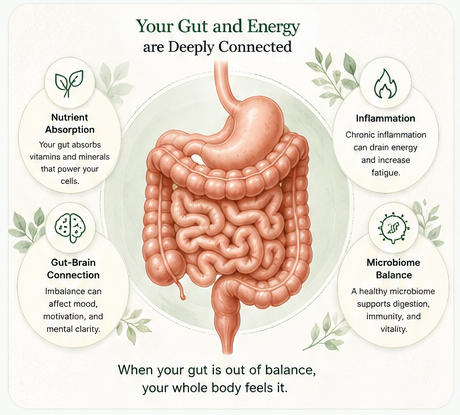
Your gut, nervous system, immune system, and microbiome communicate with one another. That does not make fatigue “a gut problem,” but it is one reason the systems should not be viewed in isolation.
Medical Conditions
Thyroid disease, diabetes, infections, heart or lung disease, autoimmune conditions, depression, and many other conditions can cause fatigue.
Explore autoimmune-related gut concerns →Food Has to Become Fuel.
Eating food is only the beginning.
Your digestive system breaks food into smaller parts, your small intestine absorbs most nutrients, and your blood carries those nutrients where they can be used for energy, growth, and repair.
If a medical digestive problem is interfering with digestion, absorption, intake, or hydration, fatigue can sometimes be one of the clues.
Track What Happens Around the Fatigue.
A few days of simple notes can make a consultation much more useful.
More Caffeine Is Not a Fatigue Evaluation.
Short-term relief can be useful. It just should not replace figuring out why the problem keeps returning.
Managing the Feeling
- Another coffee or energy drink
- Random vitamins “for energy”
- Pushing through and hoping the weekend fixes it
- Skipping exercise because you feel depleted
- Changing foods without knowing what you are looking for
- Assuming fatigue is simply age or stress
Looking for the Pattern
- How long has the fatigue been present?
- Is your sleep actually restorative?
- Are there digestive or bowel symptoms at the same time?
- Could medications, nutrition, hydration, or activity be contributing?
- Are there signs that medical testing or another provider is needed?
- What is the most sensible next step for you?
Fatigue That Lasts for Weeks Deserves More Than Guesswork.
Fatigue can be a normal response to a hard week, poor sleep, stress, or increased activity. But when it keeps going or is changing your life, it is worth discussing with a healthcare professional.
Get urgent or emergency care for fatigue with warning signs such as:
- Chest pain
- Shortness of breath
- A fast or irregular heartbeat with concerning symptoms
- Feeling like you may pass out or fainting
- Severe abdominal, pelvic, or back pain
- Vomiting blood, rectal bleeding, or black/tarry stool
- A severe new headache or major change in mental status
These are not “wellness first” symptoms. They need appropriate medical evaluation.
We Look Beyond the Symptom.
Fatigue is one of those symptoms that can come from many directions.
That is exactly why a useful conversation should look at the whole pattern instead of assuming one cause from one complaint.

Let’s Figure Out What Your Fatigue Pattern Means for You.
The Health Clarity Session is the bridge between general information and a personalized next step.
DocEllisDC is the education and wellness hub. Ellis Mobile Chiropractic is the active one-on-one care arm where Dr. Ellis works directly with patients. The handoff is intentional.
Related Gut Health Topics
Fatigue can overlap with several other gut-health concerns. These pages help connect the pieces.
Fatigue & Gut Health FAQ
Can gut problems really make me tired?
They can be part of the picture in some people, especially when a digestive disease affects food intake, nutrient absorption, hydration, blood loss, sleep, or overall health. But fatigue has many possible causes, so it should not automatically be blamed on the gut.
What is the difference between being sleepy and being fatigued?
Sleepiness is the feeling that you may fall asleep. Fatigue is more often a lack of energy or feeling physically and mentally drained. They can happen together, but they are not the same symptom.
Should I take vitamins for fatigue?
Only when they make sense for your situation. Iron, B12, folate, vitamin D, and other nutrients can matter, but taking a supplement does not tell you whether you are deficient or why. Some supplements can also interact with medicines or cause side effects.
Can poor sleep look like a gut problem?
Yes. Poor sleep can cause fatigue by itself, and stress or sleep disruption can also affect appetite and digestive symptoms. That is why sleep belongs in the conversation even on a gut-health page.
Does everyone with fatigue need a Gut Health Program?
No. Absolutely not. Fatigue alone does not tell us whether a gut-health program is appropriate. The purpose of the Health Clarity Session is to help identify the most sensible next step.
When should I see a doctor about fatigue?
If fatigue lasts for weeks, keeps worsening, is not improving with reasonable sleep, food, hydration, and stress reduction, or comes with other concerning symptoms, medical evaluation is appropriate. Emergency symptoms such as chest pain, shortness of breath, fainting, or unusual bleeding need urgent care.
Could fatigue be caused by thyroid problems or anemia instead?
Yes. Both are common examples of medical causes of fatigue, along with sleep disorders, infections, diabetes, medications, depression, and many others. A responsible approach keeps those possibilities in view.
What should I track before my consultation?
For several days, note your energy level, sleep, meals, caffeine, bowel habits, digestive symptoms, medications, activity, and anything that clearly makes you feel better or worse. Patterns are often more useful than isolated symptoms.
You Don’t Have to Keep Pushing Through Every Day.
If fatigue keeps stealing time from work, family, exercise, or the things you enjoy, let’s look at the pattern and decide what deserves attention next.
Learn About the Health Clarity SessionMedical references used to guide this educational page
- MedlinePlus, U.S. National Library of Medicine. Fatigue.
- MedlinePlus Medical Encyclopedia. Fatigue.
- National Institute of Diabetes and Digestive and Kidney Diseases. Your Digestive System & How It Works.
- Mayo Clinic. Fatigue: When to See a Doctor.
Educational use only. This page does not diagnose the cause of fatigue and is not a substitute for medical care. Fatigue has many possible medical and nonmedical causes. Chest pain, shortness of breath, fainting or near-fainting, unusual bleeding, severe pain, severe new headache, major mental-status changes, or other concerning symptoms should be evaluated promptly by an appropriate medical professional.