
Bloating That Keeps Coming Back? Let’s Find the Why.
Bloating is common. But when your stomach feels tight, swollen, gassy or uncomfortable over and over again, your body may be telling you that something in the digestive system deserves a closer look.
The goal is not to guess at one cause from one symptom. It is to look at the pattern: what you eat, when symptoms start, how your bowels are moving, what else you feel, and what has already been tried.
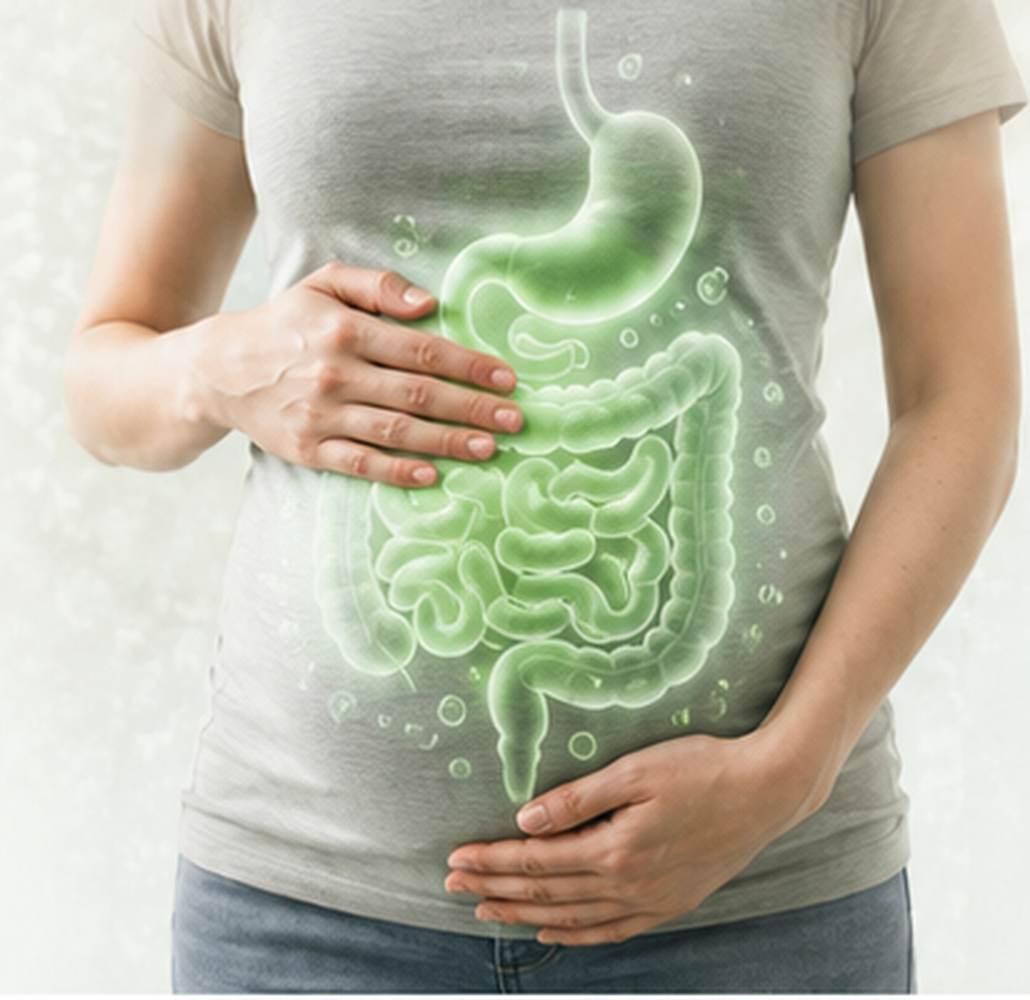
What Does “Bloating” Actually Mean?
Bloating is the feeling of fullness, pressure, swelling or tightness in your abdomen. It can happen with or without a visible change in the size of your stomach.
Doctors use a slightly different word — distension — when the abdomen actually becomes visibly larger.
Bloating can show up in different ways
Bloating Can Have Many Different Contributors.
This is where random trial-and-error gets frustrating. The same symptom can come from very different problems — and more than one factor can be present at the same time.
Gas & Fermentation
Carbohydrates that are not fully digested in the small intestine can reach the colon, where bacteria break them down and create gas. That is one reason certain foods can make some people feel dramatically more bloated.
Constipation & Slow Transit
When stool and digestive contents move too slowly, pressure can build. Constipation is a common contributor to bloating, even in people who still have bowel movements regularly.
Explore constipation & bowel patterns →Food Intolerances
Lactose, fructose and other poorly absorbed carbohydrates can trigger gas and bloating in some people. The problem is not always the food itself — sometimes it is how that food is being digested or absorbed.
Explore food sensitivities →Microbiome & SIBO
Changes in gut bacteria — including small intestinal bacterial overgrowth in selected patients — can be associated with gas, bloating and changes in bowel habits. These conditions should not be assumed from symptoms alone.
Explore the microbiome →Motility & Gut-Brain Function
The digestive tract has to move food, gas and waste in a coordinated way. Disorders of gut-brain interaction can change how the gut moves and how strongly normal pressure or stretching is felt.
Explore the gut-brain connection →Other Digestive Conditions
Celiac disease, inflammatory bowel disease, pancreatic problems and other conditions can include bloating among their symptoms. That is one reason persistent or changing symptoms deserve appropriate evaluation.
How Bloating Can Build.
Sometimes bloating is the end result of a chain reaction rather than one single problem.
Food has to be broken down, moved through the gut and absorbed appropriately. Bacteria then interact with what is left. If digestion, absorption, bowel movement or gut sensitivity changes, the amount of gas and pressure you feel can change too.
The Pattern Often Tells Us More Than the Symptom.
“I get bloated” is useful information. “I get bloated two hours after dinner, mostly on days I have not had a bowel movement” is much more useful.
Questions Worth Paying Attention To
A Small Detail Can Change the Direction
Two people can both say, “I am bloated every day,” but one may be dealing mainly with constipation while another may have a food intolerance, altered gut sensitivity, celiac disease, SIBO or another issue.
The same symptom does not automatically mean the same solution.
That is why a personalized conversation can be more useful than another generic list of “foods to avoid.”
What People Usually Try — and Why Bloating Can Still Come Back.
Some quick fixes are reasonable for the right problem. The trouble starts when every episode of bloating is treated as though it has the same cause.
Common DIY Attempts
- Gas-relief medicines or antacids
- Adding more fiber without knowing whether constipation is the problem
- Cutting out more and more foods
- Taking a random probiotic
- Trying digestive enzymes
- Using cleanses, detoxes or other short-term products
Looking at the Pattern
- Connects bloating with bowel habits, meals and timing
- Looks for food intolerance patterns rather than banning foods at random
- Considers motility and gut-brain function
- Recognizes when medical testing may be appropriate
- Builds a step-by-step strategy instead of stacking products
- Tracks whether the plan is actually changing the pattern
What About Infections or Parasites?
They belong in the conversation — but they should not be assumed just because someone is bloated.
Yes, Certain Infections Can Cause Bloating.
Some intestinal infections and parasites can cause gas, bloating, abdominal discomfort, nausea or changes in bowel habits.
Whether that possibility deserves attention depends on the rest of the story: travel, exposure risks, diarrhea, weight changes, duration of symptoms and other findings. When testing is appropriate, it should be chosen for a reason — not because every digestive symptom is automatically blamed on parasites.
That is the difference between considering parasites and assuming parasites.
Frequent Bloating Should Not Automatically Become Your “Normal.”
Occasional bloating can happen to healthy people. But a symptom that is persistent, worsening, painful or affecting your daily life deserves a closer look.
Some symptoms need medical attention sooner.
Bloating accompanied by concerning symptoms should not be treated as a wellness problem first.
- Severe or rapidly worsening abdominal pain
- Blood in the stool or black, tarry stool
- Persistent vomiting
- Unexplained weight loss or loss of appetite
- Fever with significant abdominal symptoms
- A swollen, very tender abdomen or other sudden severe symptoms
If you are unsure whether symptoms are urgent, contact an appropriate medical professional.
We Look Beyond the Symptom.
Bloating is not a program. It is a clue.
The goal is to understand the full pattern well enough to decide what deserves attention, what can reasonably be addressed through a wellness strategy, and when another type of medical evaluation is the better next step.

Let’s Figure Out What Your Bloating Pattern Means for You.
The Health Clarity Session is the bridge between general education and a personalized next step.
DocEllisDC is the education and wellness hub. Ellis Mobile Chiropractic is the active one-on-one care arm where Dr. Ellis works directly with patients. The handoff is intentional.
Related Gut Health Topics
Bloating often overlaps with other digestive patterns. These pages help connect the pieces.
Bloating FAQ
Is some bloating normal?
Yes. Some gas and temporary fullness around meals can be normal. It becomes more important to investigate when bloating is frequent, painful, worsening, or interfering with everyday life.
Why am I more bloated at night?
Food, gas and stool accumulate through the day, and symptoms may become more noticeable after multiple meals. Timing can also point toward constipation, food triggers, motility patterns or gut sensitivity.
Can constipation cause bloating even if I still have bowel movements?
Yes. Constipation is not defined only by whether you go at all. Hard stools, straining, incomplete emptying or slow movement can all be part of the pattern.
Should I just take a probiotic?
Not automatically. Different probiotics have different effects, and the American Gastroenterological Association advises against using probiotics specifically to treat abdominal bloating and distension.
Could bloating be a food intolerance?
It can. Lactose, fructose and certain fermentable carbohydrates can contribute in some people. A structured approach is usually more useful than removing large groups of foods indefinitely without a plan.
Do I need a Gut Health Program just because I am bloated?
No. Bloating by itself does not tell us what program, if any, is appropriate. The Health Clarity Session exists to help determine what makes sense based on the full picture.
You Don’t Have to Keep Guessing.
If bloating keeps coming back, let’s look at the pattern and decide what deserves attention next.
Learn About the Health Clarity SessionMedical references used to guide this educational page
- American Gastroenterological Association. Evaluation and management of belching, abdominal bloating and distention. 2023. Clinical Practice Update.
- Moshiree B, Drossman D, Shaukat A. AGA Clinical Practice Update on Evaluation and Management of Belching, Abdominal Bloating, and Distention: Expert Review. Gastroenterology. 2023;165(3):791-800.e3. PubMed.
- National Institute of Diabetes and Digestive and Kidney Diseases. Symptoms & Causes of Gas in the Digestive Tract.
- National Institute of Diabetes and Digestive and Kidney Diseases. Symptoms & Causes of Celiac Disease.
Educational use only. This page does not diagnose the cause of bloating and is not a substitute for medical care. Severe or rapidly worsening abdominal pain, blood in the stool, black or tarry stool, persistent vomiting, significant unexplained weight loss, fever with significant abdominal symptoms, a very swollen and tender abdomen, or other concerning symptoms should be evaluated promptly by an appropriate medical professional.